
The recruiting process
One-on-one help
Where you stand
What you could earn
For college coaches

NCAA D1 track and field schools
Use the filters below to explore every NCAA Division I school with a track and field and/or XC program. Find more information about D1 track and field recruiting, including results, standards, and scholarships further down the page.
NCAA D1 programs













Showing 30 of 362 programs
362programs
33conferences
45track and field roster limit per gender at most schools
Programs and conferences: Streamline Athletes, updated daily. Roster limit: NCAA, 2026-27.
How D1 recruiting works
What is NCAA Division I?
Division I is the top level of the NCAA, home to the best-funded athletic departments and the largest schools by brand name. The NCAA counts about 310 men's and 355 women's D1 outdoor track and field programs, and about 331 men's and 362 women's cross country programs. The D1 national championships are the highest level of college track and field in the world.
A school's division belongs to its whole athletic department, and football and basketball often decide it. That means a D1 label tells you little about how much a school invests in track and field. Some D1 programs have no outdoor track and recruit only distance runners, and some D2 programs would beat them in a dual meet. Judge each program on its own.
What conferences are D1, and what schools compete in these conferences?
D1 track and field has 33 conferences. The four biggest are the Power 4: the SEC, Big Ten, ACC, and Big 12. The rest include conferences such as the Mountain West, the American Conference, the Pac-12, the Big East, the Ivy League, Conference USA, the Southern Conference, the CAA, the MAC, the Metro Conference, and the Horizon League. Every D1 conference and its schools are listed below, and the directory above filters by conference.
Conference matters more than division. Power 4 programs recruit mostly full-scholarship athletes, many of them transfers, who can score at the conference championship right away. Conferences like Conference USA, the Southern Conference, the CAA, the MAC, the Metro Conference, and the Horizon League have lower scoring lines at their championships, which leaves more room for true freshmen and athletes still developing.
What are the Power 4 conferences?
The Power 4 are the SEC, the Big Ten, the ACC, and the Big 12, the conferences with the largest athletic budgets. Until 2024 there was a Power 5 that included the Pac-12, before ten Pac-12 schools moved to the Big Ten, Big 12, and ACC. Power 4 track programs usually recruit near the top of the D1 range. Visit our Standards page for the PRs recruits need for Power conference track and field and cross country teams.
 From the blogWhat is a Power Four school? A guide to Power Four conferences and what they mean for your recruitment processThe Power Four conferences dominate NCAA sports, but do you need to compete for one to succeed in track and field or cross country? Discover what Power Four schools really mean for your recruiting journey.
Who is in the Pac-12 now?
The Pac-12 rebuilt in 2026 with nine members: Boise State, Colorado State, Fresno State, Gonzaga, Oregon State, San Diego State, Texas State, Utah State, and Washington State. It is not a Power 4 conference. Nine schools sponsor women's cross country and outdoor track and field, and seven sponsor the men's teams.
 From the blogThe new Pac-12 for track and field: Who's in, what changed, and what it means for recruitsThe Pac-12 is back. Nine schools, new identity, official start July 1, 2026. Here's what track and field and cross country recruits need to know about the rebuilt conference.
How do D1 coaches decide who to recruit?
D1 coaches recruit for their conference championship. Points at conference mean the team improves, the coach keeps their job, and the athletic department keeps funding the program. The athletes a coach wants most can score at conference in their first year or two.
That is why scoring in more than one event stands out, and why last year's roster is a poor guide to who a team needs now. Compare your performances to the scoring lines at each conference championship, and aim for programs where you could contribute within your first two years. Our conference-impact lens shows how.
Timing matters too. Junior year (Grade 11) is when an athlete needs D1 performances to talk to coaches on time, line up visits, and commit before or early in senior year.
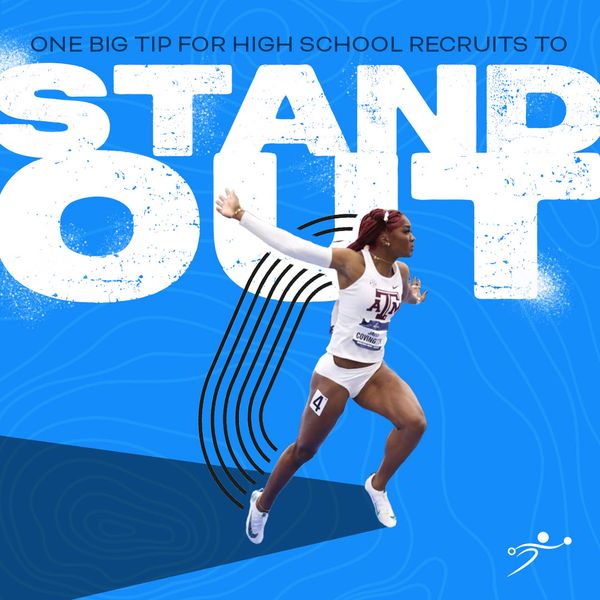 From the blogOne big tip for high school track & field athletes targeting NCAA Division I recruitmentWant to get recruited for NCAA Division I track and field? This in-depth guide breaks down how high school athletes can stand out by becoming elite in more than one event. Includes performance benchmarks, event-specific advice, and insights into what college coaches are really looking for.
What performances do you need for D1?
It depends on the event, the conference, and the program. D1 programs recruit across a range: the top of the range is where scholarship interest starts, and the bottom is where walk-on interest starts. Power 4 programs usually recruit near the top.
In October 2026, about 1 in 10 high school athletes with a verified sprint or distance time on Streamline Athletes had run inside the D1 range in at least one event (How to go D1 in track and field, Brett Montrose, 14 October 2026). Our college track and field recruiting standards show the D1 range for every event, and the performances D1 coaches are contacting athletes for on Streamline Athletes, updated every day. To see where your own performances fit, try the track and field recruiting calculator.
The table below shows the top eight in every event at the 2026 NCAA D1 championships.
| Event | Winner | Result | 8th place |
|---|---|---|---|
| 100m | Shenese Walker Florida State | 10.88 (0.0) | 11.14 |
| 200m | Adaejah Hodge Georgia | 21.68 (-0.4) | 22.54 |
| 400m | Dejanea Oakley Georgia | 48.79 | 50.91 |
| 800m | Sanu Jallow Arkansas | 1:56.85 | 1:59.82 |
| 1500m | Rosemary Longisa Washington State | 4:12.10 | 4:15.26 |
| 3000m steeplechase | Taylor Lovell Brigham Young | 9:21.03 | 9:50.03 |
| 5000m | Marion Jepngetich New Mexico | 15:13.01 | 15:18.71 |
| 10,000m | Mercyline Kirwa Iowa State | 31:54.88 | 32:16.16 |
| 100m hurdles | Aaliyah McCormick Oregon | 12.47 (+1.2) | 13.18 |
| 400m hurdles | Akala Garrett South Carolina | 53.32 | 56.21 |
| 4x100m relay | Southern California | 41.58 | 43.09 |
| 4x400m relay | Arkansas | 3:18.88 | 3:29.27 |
| High jump | Temitope Adeshina Texas Tech | 1.96m | 1.87m |
| Pole vault | Amanda Moll Washington | 4.84m | 4.49m |
| Long jump | Alyssa Jones Stanford | 7.06m (+0.2) | 6.44m (+0.1) |
| Triple jump | Shantae Foreman Clemson | 14.24m (+1.2) | 13.38m (+0.6) |
| Shot put (4kg) | Axelina Johansson Nebraska - Lincoln | 19.92m | 17.51m |
| Discus (1kg) | Alida Van Daalen Florida | 65.98m | 56.15m |
| Hammer (4kg) | Elisabet Rut Runarsdottir Texas State | 73.19m | 68.60m |
| Javelin (600g) | McKyla Van Der Westhuizen Rice | 60.87m | 54.75m |
| Heptathlon | Sofia Cosculluela Washington | 6182 pts | 5913 pts |
8th place is the last scoring place in the final. Results: TFRRS.
How many track and field scholarships does D1 have now?
Almost every D1 school opted into the House settlement, which replaced the old scholarship limits (12.6 for men and 18 for women) with roster limits in July 2025. Those schools can now fund every athlete on the roster. In practice, many track and field programs still work within internal limits that match or come close to the old ones, and coaches divide that money across the roster, so most D1 athletic awards are still partial.
The Ivy League opted out and gives no athletic scholarships. For how athletic and academic aid combine at every level, read how college track and field scholarships work.
 From the blogNCAA roster size and scholarship changes in track & field/cross country (2025)The 2025 House settlement capped NCAA Division I track and field rosters at 45 and cross country at 17 at schools that opted in, and removed their scholarship limits. Who is affected, what it means for recruits and transfers, and what changed by 2026.
What are D1 roster limits? Do D1 track and field programs still recruit walk-ons?
At schools in the House settlement, a D1 track and field roster is limited to 45 athletes, and a cross country roster to 17. One limit covers every event group, so a women's team might carry 45 athletes across sprints, hurdles, jumps, throws, and distance. D1 is harder to get into than it has ever been, and fewer D1 spots push better athletes into D2, D3, NAIA, and junior college programs.
Walk-on spots still exist, but there are fewer of them. A walk-on now takes one of the same limited spots as a scholarship athlete, so coaches look for walk-ons who can score at conference.
When can D1 coaches contact you?
D1 track and field and cross country coaches can make in-person, off-campus contact with an athlete from June 15 after sophomore year (Grade 10). Before then, an athlete can still reach out to coaches, fill in recruiting questionnaires, and build a profile coaches can find. Our track and field recruiting timeline covers the dates for every level.
What academic requirements does D1 have?
To compete in D1, an athlete registers with the NCAA Eligibility Center and completes 16 NCAA-approved core courses with at least a 2.3 core-course GPA. Ten of those courses, seven of them in English, math, or science, must be done before the seventh semester. D1 has not required an SAT or ACT score since 2023, though some schools still want one for admission.
Since June 2026, D1 eligibility follows a five-year clock: five seasons of competition within five years. The clock starts at full-time college enrollment, junior college included, or at the start of the academic year after the athlete turns 19, whichever comes first. The Academics and eligibility section of our recruiting guide covers the rest.
How does Ivy League recruiting work?
The eight Ivy League schools give no athletic scholarships. Aid is need-based, and the schools opted out of the House settlement and its roster limits. Ivy coaches can support an athlete's admission, but the athlete still needs the grades and test scores to be admitted.
Can international athletes compete in D1?
Yes. International athletes follow the same NCAA rules as US athletes. They register with the NCAA Eligibility Center, which reviews their school records from their own country's system and certifies their amateur status. Each school also sets its own admission requirements, which often include an English-language test for students whose first language isn't English, and every international athlete needs a US student visa (F-1). Student visa rules limit paid work, which also limits what an international athlete can earn from NIL while studying in the US.
International tuition is often higher than in-state tuition, so an international student usually needs more scholarship funding to make a US school affordable. That funding can be athletic, academic, or a mix of both.
If you're Canadian
Canadian courses count toward the 16 core courses through each province's NCAA-approved course list. Many Canadians compete in D1, and many more choose D2, NAIA, or U SPORTS once they compare roster spots and cost.
Is D1 the right level for you?
D1 is a great goal, and many families start and end their search there. Every athlete with D1 interest from coaches should explore it. But a lot of athletes go D1 and never once make their conference championship, because they joined a program in a conference too strong for them. An athlete higher on the roster of a D2, D3, or NAIA team often gets more coaching attention, competes at more championships, and has a better four years.
Judge each school on four things together: athletics, academics, money, and location. When D1 isn't the right fit, it is usually because of athletics or cost, and the other divisions and associations have strong programs and coaches recruiting right now.
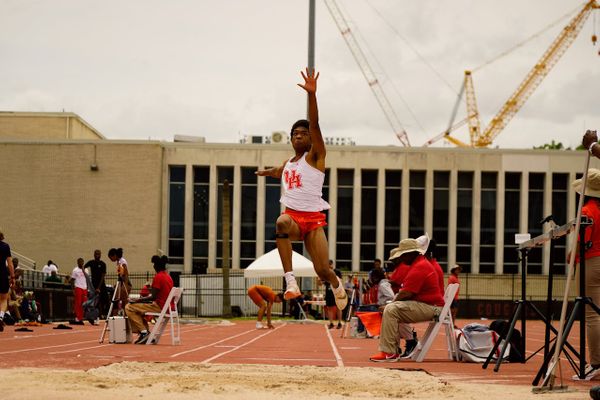 From the blogD1 vs D2 vs D3: How the NCAA divisions differ and how to find your level in track and fieldThe divisions overlap more than most athletes think. Here's how D1, D2, D3, NAIA, and U SPORTS really differ, and how to find the level that actually fits you.
Recruits who committed to D1 with Streamline Athletes advising
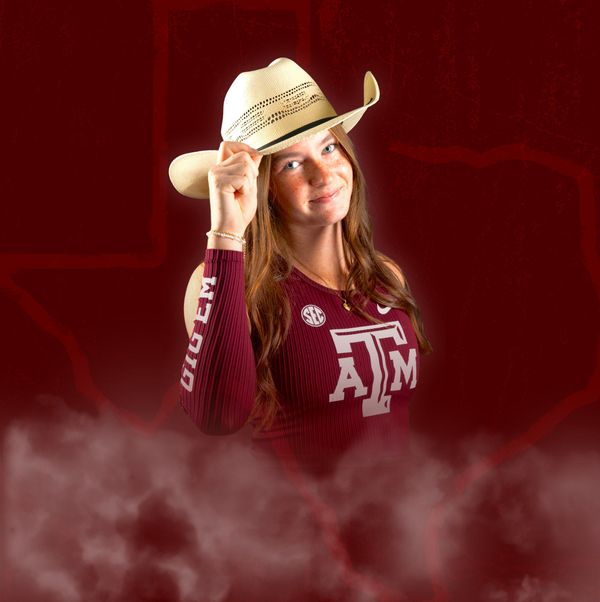 From the blogCanadian U18 record holder Lily Stroda commits to Texas A&M UniversityKelowna, BC’s Lily Stroda — one of Canada’s top young combined-event athletes — has verbally committed to Texas A&M University, joining the Aggies track and field program in the NCAA's Division I Southeastern Conference (SEC).
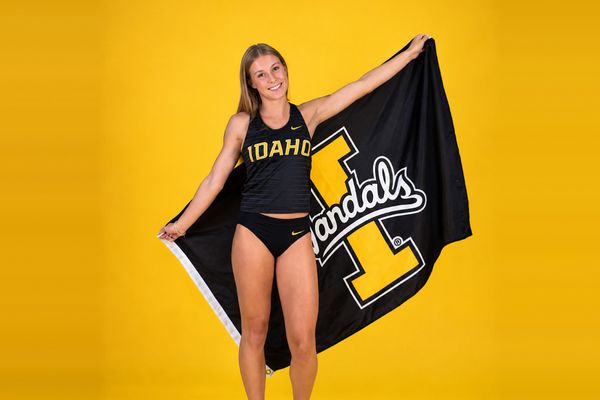 From the blogFrom Nanaimo to the Big Sky: How heptathlete Tessa Bell chose IdahoNanaimo heptathlete Tessa Bell, who won three BC high school senior titles as a grade 11 student, committed to the University of Idaho. Here's how she chose the Vandals.
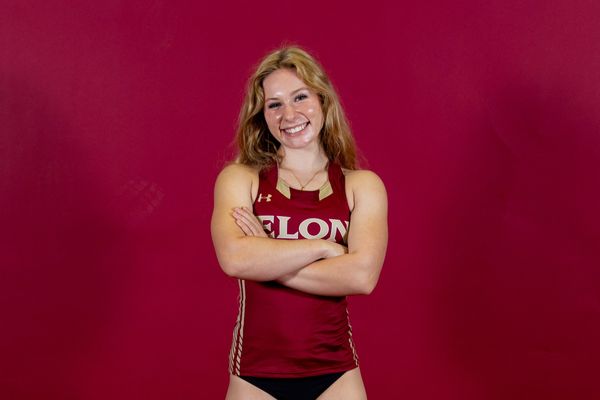 From the blogTrust the training: How Piper Hoprich restarted her recruitment and chose ElonA two-time Pennsylvania state champion in the 100m and 200m, Piper Hoprich had her search reset by the NCAA's new eligibility rule. Here's how she rebuilt it and chose Elon.
Sources: NCAA membership and sport sponsorship data, the NCAA Eligibility Center, conference releases, and Streamline Athletes advising. Program counts: Streamline Athletes.
NCAA D1 conferences
- America East ConferenceAEC · 9 programs
- American ConferenceAAC · 14 programs
- ASUN ConferenceASUN · 8 programs
- Atlantic 10 ConferenceA10 · 14 programs
- Atlantic Coast ConferenceACC · 18 programs
- Big 12 ConferenceXII · 16 programs
- Big East ConferenceBEC · 11 programs
- Big Sky ConferenceBSKC · 12 programs
- Big South ConferenceBSC · 10 programs
- Big Ten ConferenceB1G · 18 programs
- Big West ConferenceBWC · 11 programs
- Coastal Athletic AssociationCAA · 10 programs
- Conference USACUSA · 10 programs
- Horizon LeagueHL · 11 programs
- IndependentI · 10 programs
- Metro ConferenceMAAC · 12 programs
- Mid-American ConferenceMAC · 12 programs
- Mid-Eastern Athletic ConferenceMEAC · 8 programs
- Missouri Valley ConferenceMVC · 10 programs
- Mountain Pacific Sports FederationMPSF · 16 programs
- Mountain West ConferenceMWC · 10 programs
- Northeast ConferenceNEC · 11 programs
- Ohio Valley ConferenceOVC · 11 programs
- Pac-12 ConferencePAC12 · 9 programs
- Patriot LeaguePL · 10 programs
- Southeastern ConferenceSEC · 16 programs
- Southern ConferenceSOCON · 10 programs
- Southland ConferenceSC · 12 programs
- Southwestern Athletic ConferenceSWAC · 12 programs
- Sun Belt ConferenceSBC · 13 programs
- The Ivy LeagueIL · 8 programs
- The Summit LeagueSL · 8 programs
- United Athletic ConferenceUAC · 8 programs
- West Coast ConferenceWCC · 9 programs





Other associations and divisions
- NCAA D2 track and field schools283 programs
- NCAA D3 track and field schools404 programs
- NAIA track and field schools195 programs
- NJCAA D1 track and field schools83 programs
- NJCAA D2 track and field schools66 programs
- NJCAA D3 track and field schools58 programs
- CCCAA track and field schools63 programs
- NWAC track and field schools13 programs
- USCAA track and field schools12 programs
- U SPORTS track and field schools45 programs
- CCAA track and field schools52 programs


More on NCAA D1 recruiting
See all NCAA D1 posts- From Nanaimo to the Big Sky: How heptathlete Tessa Bell chose Idaho
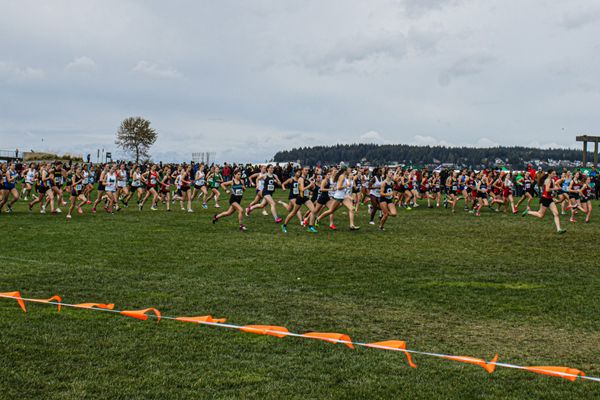 No athletic scholarship money from a D1 coach? A parent's six questions answered
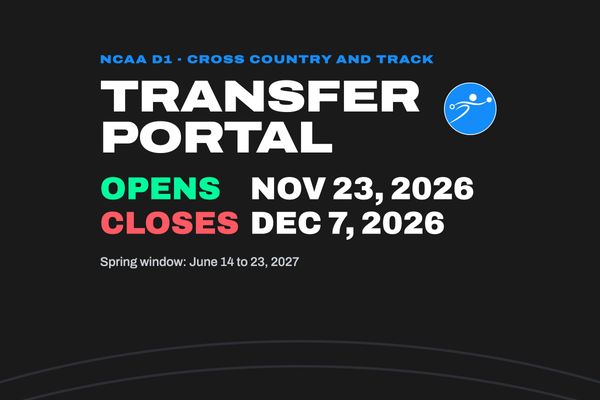 When does the transfer portal open? 2026-27 dates for track and field and cross country
- Trust the training: How Piper Hoprich restarted her recruitment and chose Elon
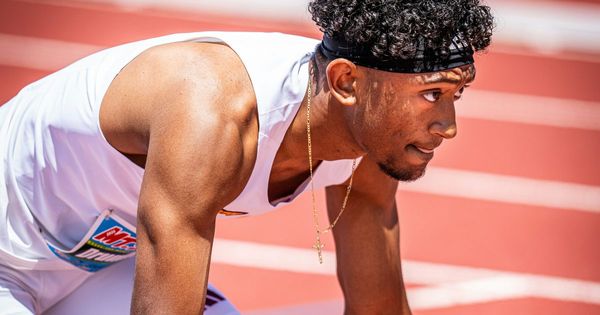 The conference-impact lens: How to match your PRs to college track & field programs
- The new Pac-12 for track and field: Who's in, what changed, and what it means for recruits
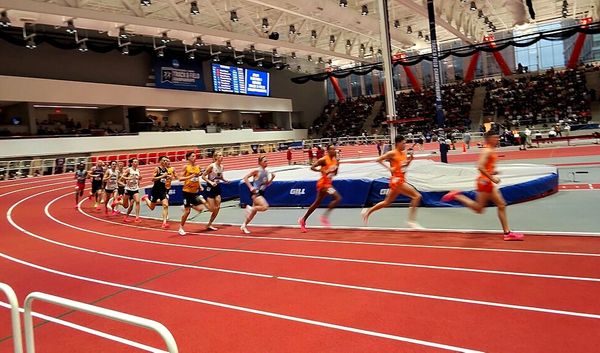 How NCAA track & field recruiting changed: 2021 to today
- D1 vs D2 vs D3: How the NCAA divisions differ and how to find your level in track and field
- Canadian U18 record holder Lily Stroda commits to Texas A&M University